
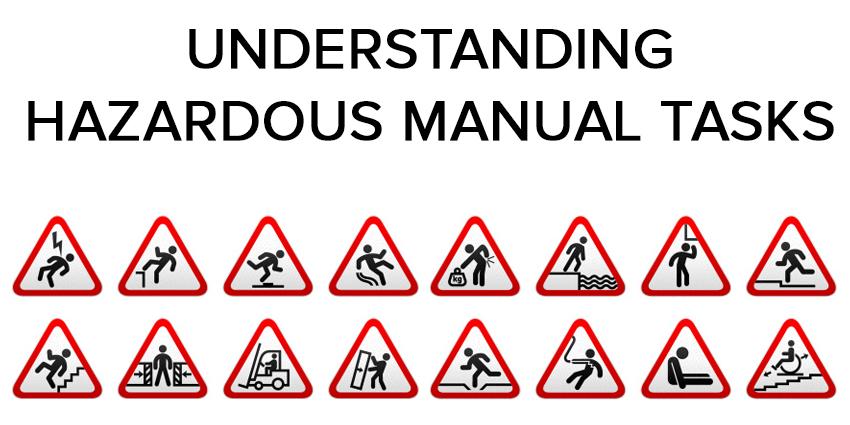
During the last 4 years, more than 145,000 workers have been injured as a result of hazardous manual tasks. WHS legislation specifically defines hazardous manual tasks & businesses are able to take simple steps to minimise risks & provide a safer workplace.
Hazardous Manual Tasks
A hazardous manual task is defined in WHS Regulations as a task that requires a person to lift, lower, push, pull, carry or otherwise move, hold or restrain any person, animal or thing involving one or more of the following:
- repetitive or sustained force
- high or sudden force
- repetitive movement
- sustained or awkward posture
- exposure to vibration
Hazardous manual tasks can contribute to musculoskeletal disorders (MSD). This includes injuries to joints, ligaments, muscles, nerves or tendons of varying severity, leading to pain and functional limitations. Traditionally, a physiotherapists role is focused on treatment of MSD’s to facilitate recovery and work capacity of the worker. However, physiotherapists who adopt an approach that is focused on identifying hazardous manual tasks, identifying the source and modifying workplace ergonomics is essential in the prevention of MSD and the promotion of business productivity.
Why do they need to do this?
SafeWork NSW data identifies that over the past four years more than 145,000 workers have been injured in NSW workplaces as a result of manual tasks.
As outlined in the WHS Regulation 60 “A person conducting a business or undertaking must manage risks to health and safety relating to a musculoskeletal disorder associated with a hazardous manual task”. By engaging Health Ability to undertake Hazardous Manual Task Assessments, ensure you meet your WHS obligations.
Undertaking manual tasks is part and parcel of doing workers day to day job, but not all of them are hazardous. To help protect workers and reduce the risks of injury, employers should identify what manual tasks may potentially be hazardous, develop controls and monitor.
HEALTH ABILITY’s qualified physiotherapists specialise in identifying risks from hazardous manual tasks. They deliver thorough assessments and create practical control measures to reduce the risk of MSD.
Step 1 – Identification
Though work place inspections & layout review, consultation with workers, supervisors, task observation and review injury statistics.
Step 2 – Assessment
A risk assessment examines task details to determine if forces, movements, and postures may cause MSDs.
HEALTH ABILITY follows the code of practice and a combination of industry recognised risk analysis tools:
- Manual Task Risk Assessment tool (ManTRA),
- Participative Ergonomics for Manual Tasks (PErforM).
Step 3 – Control & Monitor
After the Risk Assessment, HEALTH ABILITY consults with you and workers to identify proactive controls using the hierarchy of control. We provide coaching on Human Factors where needed and deliver a Hazardous Manual Task Register with a control measure report. To support monitoring, we revisit the site after six months to review effectiveness.
For support or advice with regard to Hazardous Manual Tasks, please contact our WHS specialists for assistance.
For further information, please refer to: SafeWork NSW