What’s a Psychosocial Risk Assessment?

What’s a Psychosocial Risk Assessment?

In 2025, psychological safety is no longer a secondary concern, having become a core workplace obligation. With updated WHS legislation now requiring Australian employers to manage psychosocial hazards with the same rigour as physical risks, psychosocial risk assessments have become essential. At ABILITY GROUP, we help organisations move beyond compliance to build workplaces that are safe, supportive, and strategically resilient.


What Is a Psychosocial Risk Assessment?

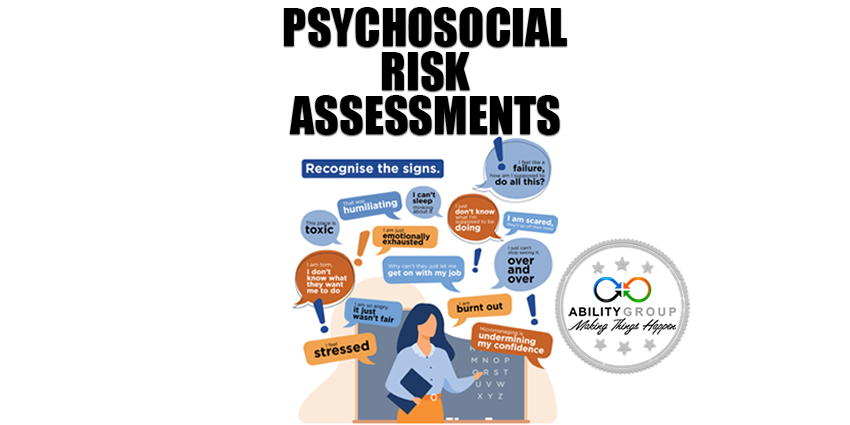
A psychosocial risk assessment is a structured process for identifying, evaluating, and controlling workplace factors that could harm mental health or wellbeing. These include:

  • High job demands or low control
  • Poor role clarity or organisational change
  • Bullying, harassment, or interpersonal conflict
  • Isolation, remote work, or lack of support
  • Exposure to traumatic events or unsafe environments

Under SafeWork Australia’s model Code of Practice, these risks must be assessed and managed using the same four-step WHS framework applied to physical hazards.

Why They Matter in 2025

Recent reforms in NSW and Victoria have elevated psychosocial risk management to a legal requirement. Employers must now:

  • Identify psychosocial hazards
  • Assess the likelihood and severity of harm
  • Implement control measures
  • Review and consult regularly

Failure to do so can result in regulatory action, increased workers’ compensation claims, and also (business/organisational) reputational damage.

In Victoria, new regulations commencing in December 2025 will require formal prevention plans and updated compliance codes for psychological health.

Suggested Approach

We support businesses with a tailored, evidence-based process and national WHS standards:

1. Workplace Audit & Hazard Identification

Review job design, leadership, culture, and environmental factors to uncover hidden psychosocial risks

2. Risk Assessment & Prioritisation

Evaluate the likelihood and impact of each hazard, helping you focus on what matters most

3. Control Planning & Implementation

Develop practical, scalable interventions, from workload redesign to peer support programs

4. Policy Integration & Documentation

Update your WHS policies, risk registers, and reporting tools to reflect 2025 compliance standards

5. Training & Engagement

Equip managers and teams with the skills to recognise, report, and respond to psychosocial risks—building a culture of care and accountability

Turning Compliance into Culture

Psychosocial risk assessments are no longer optional; they are a legal obligation and strategic necessity. As psychological injury claims rise and WHS reforms take hold, businesses should act now to protect their people and business.

ABILITY GROUP can help you:

  • Meet your legal obligations
  • Reduce risks of psychological harm
  • Reduce workers’ compensation exposure
  • Build a safer, more resilient workplace

Need help?

Contact our team to discuss.


Further Information

Source: safework Australia

Title: Identifying, assessing, controlling and reviewing

Read Time: 5+ minutes

Injury Prevention & Early Intervention

Injury Prevention & Early Intervention

In today’s fast-paced work environments, preventing injuries isn’t just a safety obligation, it can be a strategic or competitive advantage. At ABILITY GROUP, we believe proactive injury prevention and early intervention are key to building resilient teams, reducing downtime, costs and supporting long-term wellbeing. Understanding how to identify risks early and respond effectively can transform workplace culture.

(more…)
Strengthening Safety in Healthcare

Strengthening Safety in Healthcare

Australia’s healthcare and social assistance industry just received a major boost in work health and safety (WHS) guidance. Safe Work Australia has released a new Model Code of Practice specifically tailored to this sector, which is now Australia’s largest and fastest-growing workforce. For employers, partners, and professionals across hospitals, aged care, disability support, and home-based services, this code offers practical, industry-specific advice to help meet WHS obligations and reduce risk, strengthening safety in healthcare.


The Safe Work Australia Model Code of Practice, released on 4 July 2025, provides guidance for Healthcare and social assistance industry duty holders, such as employers in the healthcare and social assistance industry, on how to meet their work health and safety (WHS) duties and manage risks in their workplaces

Why This Code Matters

Healthcare and social assistance workers experience more work-related injuries than any other industry in Australia, with compensation claim rates more than double the national average. Until now, there’s been a lack of consolidated WHS guidance tailored to the unique challenges of this sector. This new Code fills that gap.

Who Should Pay Attention?

The Code is designed for Persons Conducting a Business or Undertaking (PCBUs)—including employers, managers, and service providers. It also provides valuable insights for workers, officers, designers, suppliers, and others with WHS responsibilities.

Key Risk Areas Covered

The Code outlines how to identify, assess, and control risks across a wide range of hazards, including:

  • Psychosocial hazards such as stress, fatigue, and workplace aggression
  • Hazardous manual tasks and musculoskeletal risks
  • Biological and chemical hazards, including infection control
  • Work environment risks like slips, trips, and equipment safety
  • Vehicle and electrical hazards in mobile and facility-based settings

The new Code also includes guidance on consultation, coordination, and emergency controls, helping organisations build a proactive safety culture.

What You Can Do Now

ABILITY GROUP has a proud history of assisting Healthcare and Social Assistance providers achieve better than industry results, helping minimise workers compensation and related costs essential for improving the quality of care and support. Leveraging this, we recommend organisations:

  • Review the Code and assess how it applies to your operations
  • Update your WHS policies and procedures to align with the new guidance
  • Engage your teams in consultation and training to embed safe practices
  • Monitor and review controls regularly to ensure ongoing compliance

Looking Ahead

Safe Work Australia plans to release an interactive online tool in 2026, featuring case studies and tailored content to further support implementation. In the meantime, this Code offers a strong foundation for improving safety outcomes across the sector.


Further Information

Source: safe work australia

Title: Model Code of Practice: Healthcare and social assistance industry

Read Time: 5-10 minutes

NSW WHS Changes

NSW WHS Changes

The Minns Government has announced significant NSW work health and safety (WHS) changes and investments aimed at enhancing workplace safety and compliance. These changes are emphasised by SafeWork NSW becoming an Independent Regulator, 51 new WHS inspectors (focus on NSW business compliance) and the launch of an Irreplaceable Safety campaign.

(more…)