
by ABILITY GROUP | Oct 5, 2026 | Managing Psychosocial Hazards, Work Health & Safety, Workplace safety
Artificial Intelligence (AI) is rapidly transforming the way Australian businesses operate. From automating routine administrative tasks to assisting with data analysis and decision-making, AI offers significant opportunities to improve efficiency and productivity. Alongside these benefits, however, come important workplace health and safety (WHS) considerations that employers cannot afford to overlook.
While many organisations view AI as a technology initiative, its impact extends far beyond IT systems. AI can fundamentally change how work is performed, how employees interact with their roles and how workplace risks emerge. As AI adoption continues to accelerate, employers must ensure that implementation strategies consider worker health, wellbeing and safety alongside operational objectives.
(more…)

by ABILITY GROUP | Sep 21, 2026 | Injured Worker, Injury Management, Work Health & Safety, Workplace safety
A recent prosecution by SafeWork NSW highlights the significant consequences businesses can face when working-at-heights risks are not adequately managed. A building renovator has been convicted and fined $90,000 after two workers were injured when a garage roof collapsed during demolition works.
While the financial penalty is substantial, the case serves as an important reminder that workplace health and safety obligations extend far beyond compliance. Employers must proactively identify hazards, implement appropriate controls, and ensure workers are protected from foreseeable risks.
(more…)
by ABILITY GROUP | Sep 14, 2026 | Work Health & Safety, Workplace safety
Many Australian employers focus on managing visible workplace hazards. Yet, airborne contaminants remain among the most significant and often overlooked risks across industries, including construction, manufacturing, transport, healthcare, laboratories, mining, and warehousing.
To strengthen workplace health protections, Safe Work Australia is replacing the current Workplace Exposure Standards (WES) framework with a new Workplace Exposure Limits (WEL) framework for airborne contaminants.
While businesses must continue complying with existing WES requirements until 1 December 2026, organisations should start preparing now. This transition presents an important opportunity to review workplace health risks, strengthen control measures, and ensure compliance well before the new limits take effect.
(more…)
by ABILITY GROUP | Aug 17, 2026 | Health & Wellbeing, Injury Prevention, Work Health & Safety, Workplace safety
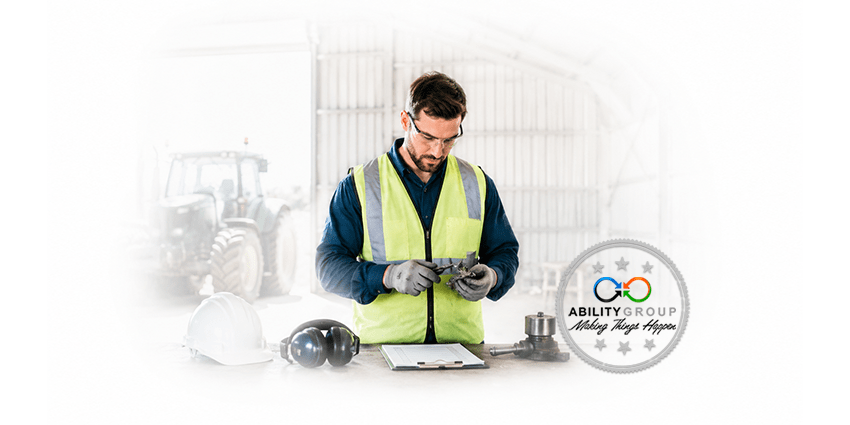
Agriculture remains one of Australia’s most hazardous industries, and the latest farm safety data released by WFI Insurance highlights lessons that extend far beyond farming into every workplace. For business owners and leaders, understanding the causes of workplace incidents is critical, not only to prevent injuries but also to reduce workers' compensation costs and create safer, more productive environments.
(more…)
by ABILITY GROUP | Jul 13, 2026 | Work Health & Safety, Workplace safety
A recent prosecution by WorkSafe Victoria has delivered one of the strongest workplace safety messages Australian businesses have seen in recent years. A Victorian bakery has been fined a record $3.4 million under workplace manslaughter legislation following a fatal workplace incident.
This landmark case is more than just a headline; it reflects a significant shift in workplace health and safety (WHS) enforcement and demonstrates the growing expectations placed on employers, directors, and business leaders to actively protect their workers.
For businesses across Australia, particularly small and medium-sized enterprises (SMEs), the case serves as a powerful reminder that workplace safety must be a core business priority, not simply a compliance obligation.
(more…)
by ABILITY GROUP | Feb 4, 2026 | Work Health & Safety, Workplace safety
The Explanatory Memorandum for the Model WHS Legislation Amendment (Incident Notification) 2025 outlines expanded incident notification laws covering psychosocial hazards, workplace violence, sexual assault, and work-related suicide or attempts. It also clarifies employer obligations, timeframes, and the scope of notifiable incidents
Background
- The Model WHS Act was amended in December 2025 by the Parliamentary Counsel’s Committee
- The Explanatory Memorandum serves as a guide for regulators, employers, and workers to understand the intent and application of the amendments
Key Changes in the Amendment
1. Expanded Definition of Notifiable Incidents
- Psychosocial hazards included: workplace violence, sexual assault, serious psychological harm, suicide, and attempted suicide
- Extended worker absences
2. Clarification of Section 35
- The requirement for a causal link between the incident and the workplace has been moved into the core definition of a notifiable incident
- This ensures consistency and reduces ambiguity for Persons Conducting a Business or Undertaking (PCBUs)
3. Notification Duties
- PCBUs must notify regulators immediately after becoming aware of a notifiable incident
- Site preservation
- A new duty requires PCBUs to notify other persons with corresponding duties, ensuring broader accountability
Implications for Employers and PCBUs
- Compliance Burden - employers must update incident reporting frameworks to include psychosocial hazards.
- Training Needs - staff must be trained to recognise and report incidents beyond physical injuries.
- Legal Risk - failure to comply with expanded notification duties may result in penalties and reputational damage.
- Worker Protection
Practical Guidance for Businesses
- Review WHS Policies - ensure incident reporting procedures align with the 2025 amendments
- Update Risk Registers - include psychosocial hazards alongside physical risks
- Engage with Regulators - establish clear communication channels for timely notification
- Educate Staff - provide awareness sessions on recognising psychosocial incidents
Need Help?
The Explanatory Memorandum – Model WHS Legislation Amendment (Incident Notification) 2025 represents a significant evolution in workplace safety law. For businesses, compliance requires proactive policy updates, staff training, and a stronger focus on psychosocial risk management.
To know more, please contact us
Source: SafeWork Australia
Title: Explanatory Memorandum - Incident notification legislative amendments June 2025
Read Time: 5+ minutes
