Mental Health Claims Driving Insurance Pressure

Mental Health Claims Driving Insurance Pressure

Australian employers are facing mounting pressure from rising workers compensation costs, with psychological injury claims emerging as one of the most significant drivers of premium increases.

According to the Australian Financial Review, claim costs are escalating faster than regulators can respond, placing strain on compensation schemes and insurers alike. For business owners, HR leaders and operational managers, this trend is more than an insurance issue; it underscores the urgent need for stronger workplace mental health strategies, effective injury management, and proactive return to work practices.

(more…)
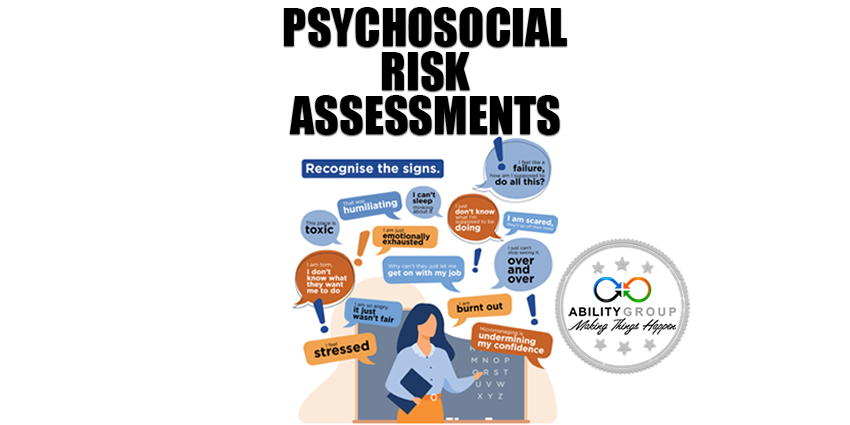
What’s a Psychosocial Risk Assessment?

What’s a Psychosocial Risk Assessment?

In 2025, psychological safety is no longer a secondary concern, having become a core workplace obligation. With updated WHS legislation now requiring Australian employers to manage psychosocial hazards with the same rigour as physical risks, psychosocial risk assessments have become essential. At ABILITY GROUP, we help organisations move beyond compliance to build workplaces that are safe, supportive, and strategically resilient.


What Is a Psychosocial Risk Assessment?

A psychosocial risk assessment is a structured process for identifying, evaluating, and controlling workplace factors that could harm mental health or wellbeing. These include:

  • High job demands or low control
  • Poor role clarity or organisational change
  • Bullying, harassment, or interpersonal conflict
  • Isolation, remote work, or lack of support
  • Exposure to traumatic events or unsafe environments

Under SafeWork Australia’s model Code of Practice, these risks must be assessed and managed using the same four-step WHS framework applied to physical hazards.

Why They Matter in 2025

Recent reforms in NSW and Victoria have elevated psychosocial risk management to a legal requirement. Employers must now:

  • Identify psychosocial hazards
  • Assess the likelihood and severity of harm
  • Implement control measures
  • Review and consult regularly

Failure to do so can result in regulatory action, increased workers’ compensation claims, and also (business/organisational) reputational damage.

In Victoria, new regulations commencing in December 2025 will require formal prevention plans and updated compliance codes for psychological health.

Suggested Approach

We support businesses with a tailored, evidence-based process and national WHS standards:

1. Workplace Audit & Hazard Identification

Review job design, leadership, culture, and environmental factors to uncover hidden psychosocial risks

2. Risk Assessment & Prioritisation

Evaluate the likelihood and impact of each hazard, helping you focus on what matters most

3. Control Planning & Implementation

Develop practical, scalable interventions, from workload redesign to peer support programs

4. Policy Integration & Documentation

Update your WHS policies, risk registers, and reporting tools to reflect 2025 compliance standards

5. Training & Engagement

Equip managers and teams with the skills to recognise, report, and respond to psychosocial risks—building a culture of care and accountability

Turning Compliance into Culture

Psychosocial risk assessments are no longer optional; they are a legal obligation and strategic necessity. As psychological injury claims rise and WHS reforms take hold, businesses should act now to protect their people and business.

ABILITY GROUP can help you:

  • Meet your legal obligations
  • Reduce risks of psychological harm
  • Reduce workers’ compensation exposure
  • Build a safer, more resilient workplace

Need help?

Contact our team to discuss.


Further Information

Source: safework Australia

Title: Identifying, assessing, controlling and reviewing

Read Time: 5+ minutes

Work Party Safety Tips

Work Party Safety Tips

The festive season is a time for celebration, but it's also a time when workplace safety must remain a top priority. Work Christmas parties, while a great way to boost morale and show appreciation for employees, can present unique safety challenges. Each year we aim to provide recommendations and work party safety tips to help you make sure your people have fun and prevent the work Christmas party hangover.

(more…)
Respect at Work

Respect at Work

Respect in the workplace is a cornerstone of healthy and productive work environments. In Australia, fostering respect at work has become a significant focus, driven by legislative changes and a growing awareness of the importance of a respectful workplace culture. So what is the legislative framework? How do you create a respectful workplace? What are the benefits of a respectful workplace?

(more…)
Psychological Workplace Risks

Psychological Workplace Risks

Psychological risks in the workplace, often referred to as psychosocial hazards, can significantly impact employees' mental health and overall well-being. These risks stem from how work is organised, social dynamics, and the work environment itself. Identifying and addressing these risks is crucial for maintaining a healthy and productive workforce. The NSW Government has launched a new strategy to tackle psychological risks, aligned with the Code of Practice.


Context

Although the model WHS laws have always addressed both physical and psychological health and safety, considerable efforts have been made in recent years to better assist duty holders in complying with their WHS responsibilities. This includes Safe Work Australia updating the model WHS Regulations to address psychosocial risks and releasing a model Code of Practice for managing psychosocial hazards at work. Enhancing the capability of PCBUs, regulators, and workers to ensure compliance with the duty to manage psychosocial hazards at work is a primary goal of the Australian WHS Strategy 2023-2033. Safe Work Australia is actively working towards this goal by providing access to high-quality data on psychosocial hazards, which informs policy development and supports activities by WHS regulators, worker and employer representatives, duty holders, and workers.

Mental health conditions have become an increasingly significant portion of serious workers' compensation claims, drawing substantial attention in recent years as awareness of their impact on individuals and workplaces has grown.

NSW Strategy

The New South Wales Government has launched the SafeWork NSW Psychological Health and Safety Strategy 2024-2026 to help employers manage psychosocial risks and protect workers from psychological harm. The strategy, supported by $5.6 million, focuses on small and medium businesses, providing mental health programs through the Black Dog Institute and Transitioning Well.

Key elements of the strategy include:

  • Practical tools, resources, and webinars for businesses
  • Translated resources to support culturally and linguistically diverse workers
  • Enhanced capabilities and compliance visits by SafeWork NSW inspectors
  • Industry forums to identify psychosocial hazards

The strategy aims to reduce the estimated $39 billion annual cost of workplace mental ill health in Australia. It emphasises the importance of mental well-being for worker retention and talent management.

Ministers Sophie Cotsis, Steve Kamper, and Rose Jackson highlighted the need for collective action to ensure safe workplaces. SafeWork NSW Acting Deputy Secretary Trent Curtin stressed compliance checks for high-risk businesses, noting the business costs of absenteeism and presenteeism.

The strategy was developed with input from various stakeholders, including workers, health and safety professionals, unions, and businesses.

Need Help?

Do you have concerns and need help? Contact our team to discuss.

Further Information

Source: NSW Government

Title: New strategy to address psychological risks in the workplace with $5.6m in business assistance

Read Time: 5 Minutes


Source: SafeWork

Title: Psychosocial hazards

Read Time: 5 Minutes