What’s a Psychosocial Risk Assessment?

What’s a Psychosocial Risk Assessment?

In 2025, psychological safety is no longer a secondary concern, having become a core workplace obligation. With updated WHS legislation now requiring Australian employers to manage psychosocial hazards with the same rigour as physical risks, psychosocial risk assessments have become essential. At ABILITY GROUP, we help organisations move beyond compliance to build workplaces that are safe, supportive, and strategically resilient.


What Is a Psychosocial Risk Assessment?

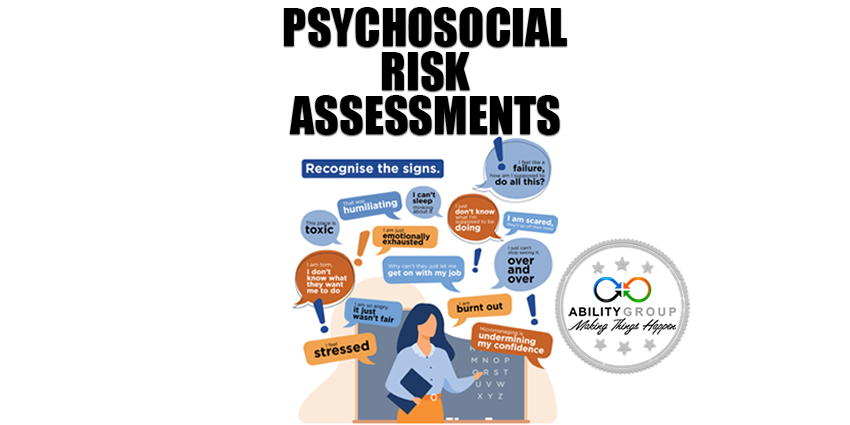
A psychosocial risk assessment is a structured process for identifying, evaluating, and controlling workplace factors that could harm mental health or wellbeing. These include:

  • High job demands or low control
  • Poor role clarity or organisational change
  • Bullying, harassment, or interpersonal conflict
  • Isolation, remote work, or lack of support
  • Exposure to traumatic events or unsafe environments

Under SafeWork Australia’s model Code of Practice, these risks must be assessed and managed using the same four-step WHS framework applied to physical hazards.

Why They Matter in 2025

Recent reforms in NSW and Victoria have elevated psychosocial risk management to a legal requirement. Employers must now:

  • Identify psychosocial hazards
  • Assess the likelihood and severity of harm
  • Implement control measures
  • Review and consult regularly

Failure to do so can result in regulatory action, increased workers’ compensation claims, and also (business/organisational) reputational damage.

In Victoria, new regulations commencing in December 2025 will require formal prevention plans and updated compliance codes for psychological health.

Suggested Approach

We support businesses with a tailored, evidence-based process and national WHS standards:

1. Workplace Audit & Hazard Identification

Review job design, leadership, culture, and environmental factors to uncover hidden psychosocial risks

2. Risk Assessment & Prioritisation

Evaluate the likelihood and impact of each hazard, helping you focus on what matters most

3. Control Planning & Implementation

Develop practical, scalable interventions, from workload redesign to peer support programs

4. Policy Integration & Documentation

Update your WHS policies, risk registers, and reporting tools to reflect 2025 compliance standards

5. Training & Engagement

Equip managers and teams with the skills to recognise, report, and respond to psychosocial risks—building a culture of care and accountability

Turning Compliance into Culture

Psychosocial risk assessments are no longer optional; they are a legal obligation and strategic necessity. As psychological injury claims rise and WHS reforms take hold, businesses should act now to protect their people and business.

ABILITY GROUP can help you:

  • Meet your legal obligations
  • Reduce risks of psychological harm
  • Reduce workers’ compensation exposure
  • Build a safer, more resilient workplace

Need help?

Contact our team to discuss.


Further Information

Source: safework Australia

Title: Identifying, assessing, controlling and reviewing

Read Time: 5+ minutes
Rising Mental Health Claims

Rising Mental Health Claims

In recent years, Australia has witnessed a concerning surge in workers' compensation claims related to mental health issues. This trend highlights rising mental health awareness and the need for strong workplace support systems. We delve into the factors contributing to this rise and explore potential solutions to address rising mental health claims.

Understanding the Rise

The increase in mental health-related workers' compensation claims in Australia is multifaceted and can be attributed to several key factors:

  1. Heightened Awareness: There has been a significant increase in awareness and recognition of mental health issues in the workplace. Employees are now more inclined to report mental health-related issues, leading to a rise in compensation claims
  2. Work-Related Stress: Modern workplaces often operate in high-pressure environments, leading to increased levels of work-related stress. Factors such as long working hours, tight deadlines, and job insecurity contribute to heightened stress levels among employees
  3. Stigma Reduction: Efforts to reduce the stigma surrounding mental health have encouraged individuals to seek help when experiencing psychological distress. This has resulted in more employees coming forward to seek support and lodging compensation claims for work-related mental health issues
  4. Changing Work Dynamics: Remote work, accelerated by COVID-19, brings isolation, blurred boundaries, and mental health challenges.
  5. Inadequate Support: Many workplaces still lack resources to effectively address mental health needs. This deficiency can exacerbate existing problems and contribute to the rise in compensation claims

Addressing the Issue

To address rising mental health claims, implement strategies that prioritise employee well-being. Here are some potential solutions:

  1. Promoting Mental Health: Employers should prioritise awareness programs to build a supportive, inclusive workplace. This includes providing education on stress management, resilience building, and destigmatising conversations around mental health
  2. Work-Life Balance: Promote flexible schedules, regular breaks, and manageable workloads to reduce stress and support well-being
  3. These services should be easily accessible and confidential to encourage employees to seek help when needed
  4. Training Managers and Supervisors: Providing managers and supervisors training on recognising signs of mental distress, managing workloads effectively, and offering appropriate support can play a crucial role in preventing mental health issues and reducing workers' compensation claims
  5. Creating a Psychologically Safe Environment: Organisations must prioritise creating a psychologically safe work environment where employees feel comfortable discussing mental health concerns without fear of judgment or reprisal. Open communication channels and supportive leadership are essential in fostering trust and well-being.
  6. Regular Monitoring and Evaluation: Employers should regularly monitor and evaluate the effectiveness of their mental health initiatives to identify areas for improvement and ensure that the needs of employees are being met adequately

The rise in mental health-related compensation claims in Australia underscores the urgent need for proactive workplace support. Prioritizing awareness, supportive policies, and open culture can reduce risks and build resilient, healthy workplaces. Collaboration among employers, policymakers, and stakeholders is key to ensuring workforce well-being

Mental health or psychological workers compensation claims are typically 7-8 times more than physical injuries. They are often complex & if not actively managed, they can have substantial impacts to your business.

Need help with a psychological or mental health related claim, contact our team to discuss.

For further information, please refer:

Source: SafeWork

Title: Psychological health and safety in the workplace report

Read Time: 10+ minutes