Mental health issues are the 3rd most frequent health condition after cancer & health disease. This means supervisors are likely to be managing workers suffering from a mental illness. We have identified common mental health hazards & workplace risk mitigation strategies.
An increasing concern for many businesses are the risks of mental health related incidents, injuries and resulting workers compensation claims.
Beginning 1 January 2019, the State Insurance Regulatory Authority (SIRA) introduced reforms to the workers' compensation dispute resolution process, aligning with the Workers Compensation Legislation Amendment Act 2018. These reforms were designed to streamline claims handling, reduce disputes, and improve support services for injured workers and employers.
Goals of the Reform
Minimize disputes through clearer processes
Improve efficiency in claims management
Ensure faster responses from insurers
Enhance transparency and accountability
Provide stronger support services for both workers and employers
Five Key Changes Impacting Injury Management
Centralized Dispute Resolution
The Workers Compensation Commission (WCC) now resolves all disputes.
Injured workers benefit from mandatory internal reviews, ensuring fairer outcomes.
Timely Insurer Responses
Insurers must respond within 14 days to work capacity decisions or liability reviews.
Legal costs for workers challenging work capacity decisions are covered by Independent Legal Assistance & Review Service (ILARS).
Improved Decision Transparency
Notice templates must clearly identify information received from employers, workers, and insurers.
This ensures decisions are based on complete and balanced evidence.
Clear Complaint Pathways
Workers’ insurer remains the first point of contact.
Unresolved employer complaints go to SIRA (13 10 50 / contact@sira.nsw.gov.au).
Unresolved worker complaints go to Workers Compensation Independent Review Office (WIRO) (13 94 76 / contact@wiro.nsw.gov.au).
Permanent Impairment Compensation
In certain cases, the WCC can award permanent impairment compensation without referral to an Approved Medical Specialist.
SIRA (State Insurance Regulatory Authority) has intensified efforts to identify employer non-compliance in New South Wales, targeting businesses that fail to lodge mandatory workers’ compensation policies. Through advanced data analytics and a structured notification program, hundreds of employers have already been flagged, with penalties and premium recoveries reaching millions.
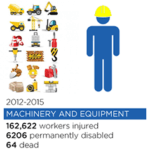
Employees who operate machinery & equipment as part of their job are at risk of major injury if the correct safety precautions are not taken. There are specific laws for working with machinery & equipment. Recent data from SafeWork NSW highlight risks.
According to a recent article, there has been a significant increase in complaints in relation to workers' compensation claims fraud. Fraudulent claims include claiming for a non-work related injuries, failure to declare information, altering medical certificates, etc. The recent conviction of a fraudulent worker highlights the emphasis placed on legitimate claims.
Icare has announced the launch of its Medical Panel Trial, a pilot program designed to streamline treatment approvals for injured workers under the NSW workers' compensation scheme. The initiative introduces an independent panel of medical providers to review and approve treatment plans more efficiently, aiming to reduce delays and improve recovery outcomes.